

We would all be planting money trees in our backyards and practically everyone would have money if our fantasies were true, but that isn't how things actually work.
The majority of people think that governments "print" money, therefore where does the fresh money originate from?
According to some, central banks continue to mint it in vaults. Some people believe that commercial banks "lend out" the money that savers deposit.
While there is some truth to each of the three theories, it is not the whole picture.
This article explains how money is made, its various forms, and why it is important for people, businesses, and economies to understand the process in order to fully comprehend who makes it.
What is money?
Money is a recognized and approved medium that is used to promote economic exchange and trade. This includes coins, banknotes, and any legal money that has been formally issued by a government.
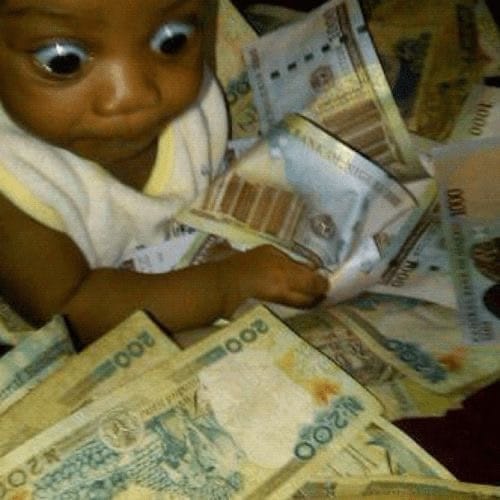
Furthermore, any item or payment that is readily convertible into cash can be referred to as money, enabling people and organizations to make investments, interact, and provide value.
Money can also be used as:
- Unit of account: A common quantifiable way to express value.
- Storage of Value: Something you can keep and get back without suffering a lot of loss.
- Medium of exchange: A system for effectively exchanging goods and services.
Types Of Money
We have various forms of money, each of which is unique and different in its own way.
- Commodity money: is money that has a fundamental value or actual value because it is valuable in and of itself, independent of official declarations. For instance, ancient civilizations used gold coins. The gold itself has worth and is still in use today because of it, even if it isn't used as money.
- Fiat money: is a form of money that has no actual value but has been approved by a government as legal tender. Government support and trust are what give it its value. Modern currencies like the US dollar, naira, or euros are examples of this. Despite being merely paper, a $20 or $100,000 bill is accepted because the government claims it is money.
- Representative money: One kind of money that can be traded for a commodity is representative money, which is a claim on that commodity. A gold certificate or paper note backed by gold reserves is the best way to describe this. Although the note isn't worth much, you could exchange it for gold.
- Bank Money / Demand Deposits: is another type of money held in bank accounts that can be accessed on demand, usually via checks, debit cards, or electronic transfers. This one is the most common one as it is practiced by you when checking your account balance. And based on the value you have, you can pay for groceries by swiping a card even though no physical cash changes hands.
- Cryptocurrency: this is another type of money that is gaining popularity among everyone so what exactly is it, it is a decentralized digital money based on blockchain technology. Its value comes from scarcity, security, and trust in the system rather than government backing. A popular example of this is Bitcoin or Ethereum. You can send or receive it globally without banks, though acceptance varies.
- Quasi-Money: this is a type of money that is usually in the form of an asset but can be quickly converted into cash. An example is Treasury bills, savings accounts, or money market funds. They’re not immediately spendable but are liquid.
Forms of Money in the Economy
In practice, money exists primarily in two forms:
- Base Money (High-Powered Money): this is Issued by a central bank like the Central Bank of Nigeria (CBN) or the U.S. Federal Reserve. This includes physical cash (notes and coins) and the digital reserves that commercial banks hold at the central bank.
- Broad Money (Deposits, Bank Balances): Created by commercial banks when they issue loans, credit lines, or overdrafts. This is the money you see in your bank account, and it’s by far the largest share of all the money in existence.
How Commercial Banks Create Money
Commercial banks play the most significant role in money creation.
This is an update that we are about to share that goes against what you might have known or heard and it is a mechanism that surprises most people:
So let's say you walk into a bank and take a ₦1 million loan, the bank does not transfer existing cash from someone else’s deposit.
What it does is that it creates a new deposit in your account, by typing the amount into its books or records. That number becomes new money in the economy.
You spend it, it circulates, and other banks accept it as valid because the system is interconnected and backed by the central bank’s clearing infrastructure
So, in accounting terms:
- The bank adds ₦1 million to your account (a liability for the bank, because it owes you that money).
- It records a ₦1 million loan asset on its balance sheet (your promise to repay).
The two entries balance, and a brand-new ₦1 million is born. And this process is called “money creation through credit extension.”
Role of Central Banks
Central banks like the CBN, Federal Reserve, or Bank of England don’t create most of the money directly, but they set and decide the rules of the game just like referees.
They influence how much money banks can create by controlling:
- Setting interest rates: influencing the cost of credit.
- Controlling reserve requirements: how much banks must hold in secure reserves.
- Conducting open market operations: buying or selling government securities.
- Enforcing capital adequacy rules: determining safe levels of lending.
By tightening or loosening these rules, central banks guide how much money commercial banks can create, ensuring stability in the financial system.
Government Role in Money Creation
Therefore, governments can indirectly generate money, which is mostly accomplished through fiscal policy, since they cannot function or run without it.
Here’s how it happens:
- The government issues bonds (IOUs).
- The central bank or commercial banks buy those bonds, crediting the government’s account.
- When the government spends (salaries, subsidies, contracts), money flows into the economy, creating deposits in the banking system.
Note: If the central bank purchases those bonds directly, it is essentially creating new money backed by government debt (a process called monetizing the deficit). In order to flood the economies with cash flow, fresh money was manufactured in this manner during the COVID-19 epidemic, just so you know.
Why Understanding Money Creation Matters
Understanding who makes money will help you make sense of environmental events as well as inflation, economic booms, and recessions.
You now understand that the world is based on the generation of credit, and that excessive credit creation, such as through loans, mortgages, and speculation, causes inflation, currency devaluation, and asset bubbles.
Additionally, company stagnation, unemployment, and declining growth are the outcomes of too little credit.
For this reason, in an effort to find a balance, regulators and all parties involved continuously modify interest rates and liquidity.
Who Actually Creates Money?
In reality, money is created jointly by:
- Commercial banks (through lending and deposits).
- Central banks (through policy and reserve management).
- Governments (through fiscal deficits and bond issuance).
In essence Money is created by agreement rather than by printing. A new currency is created when two people acknowledge that a numerical value has worth and the system supports that claim.
Conclusion
In the end, money is a social technology supported by institutions and based on beliefs rather than being made of metal or paper. And the first step to grasping how money influences politics, economies, and your personal financial life is to understand who makes it.